
What directing a visual story taught me about working with AI
I've always been a big comics fan, so when I wrote the Buzzy Manifesto I knew I also wanted a comic version of it. Comics are a unique form of communication, blending art and literature into a unique style that is all its own. For anyone even remotely interested in what I just wrote, I strongly recommend Scott McCloud's brilliant book Understanding Comics.
Understanding AI Comics
The key is thinking somewhat like a film director: characters, story, style. To get the best out of AI, you have to give it rules it can actually follow and context that makes something more than just "AI slop."
The Brief Is the Work
English majors rejoice! Your ability to describe things is now a valuable skill. AI can only be as specific as your instructions. And specificity, it turns out, is the whole game.
To start off, I wrote a Story Premise.
Visual Tone and Pallete
Then you pick a tone and color palette. I wanted to use color as a storytelling device. Deep midnight purple for the doomscroll sections or the Algorithm's world. Warm amber-gold for Buzzy Today, which is the solution and the resolution. When the reader's phone screen glows blue-purple, things are bad. When the room fills with amber morning light, something has changed. I never had to write "this is a hopeful moment" in a caption; the palette did the work automatically, because I gave the AI a rule it could apply consistently.
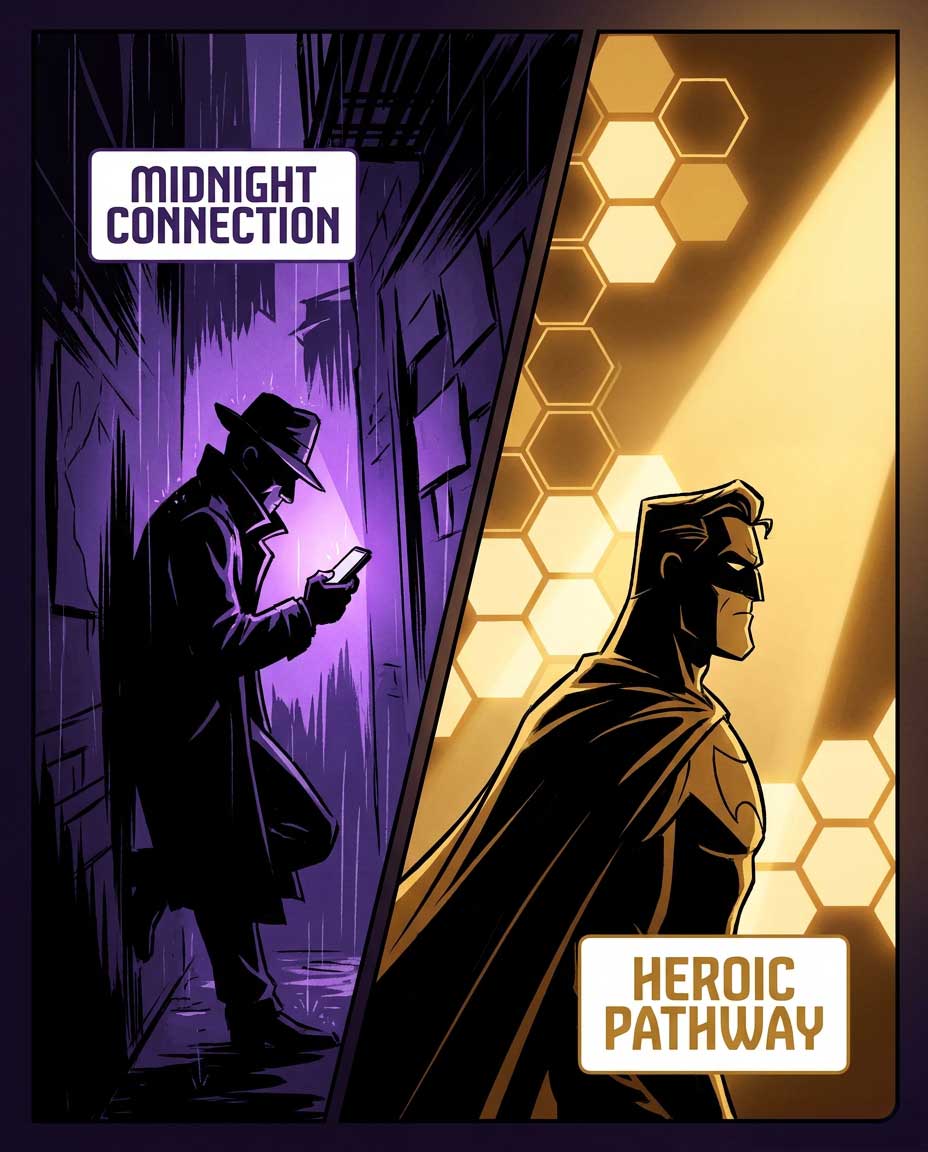
Once this was established, it was time for the characters.
Character #1: The Reader
The reader is a stand-in for anyone who reads the news and experiences manipulation or bias of some kind. I kept The Reader deliberately generic, in an oversized navy hoodie: no strong defining features beyond dark circles, the kind of face a wide range of people can project themselves onto. Their posture is the entire emotional arc of the story: slumped and gripping the phone like a lifeline in the purple sections, upright and relaxed by the end.
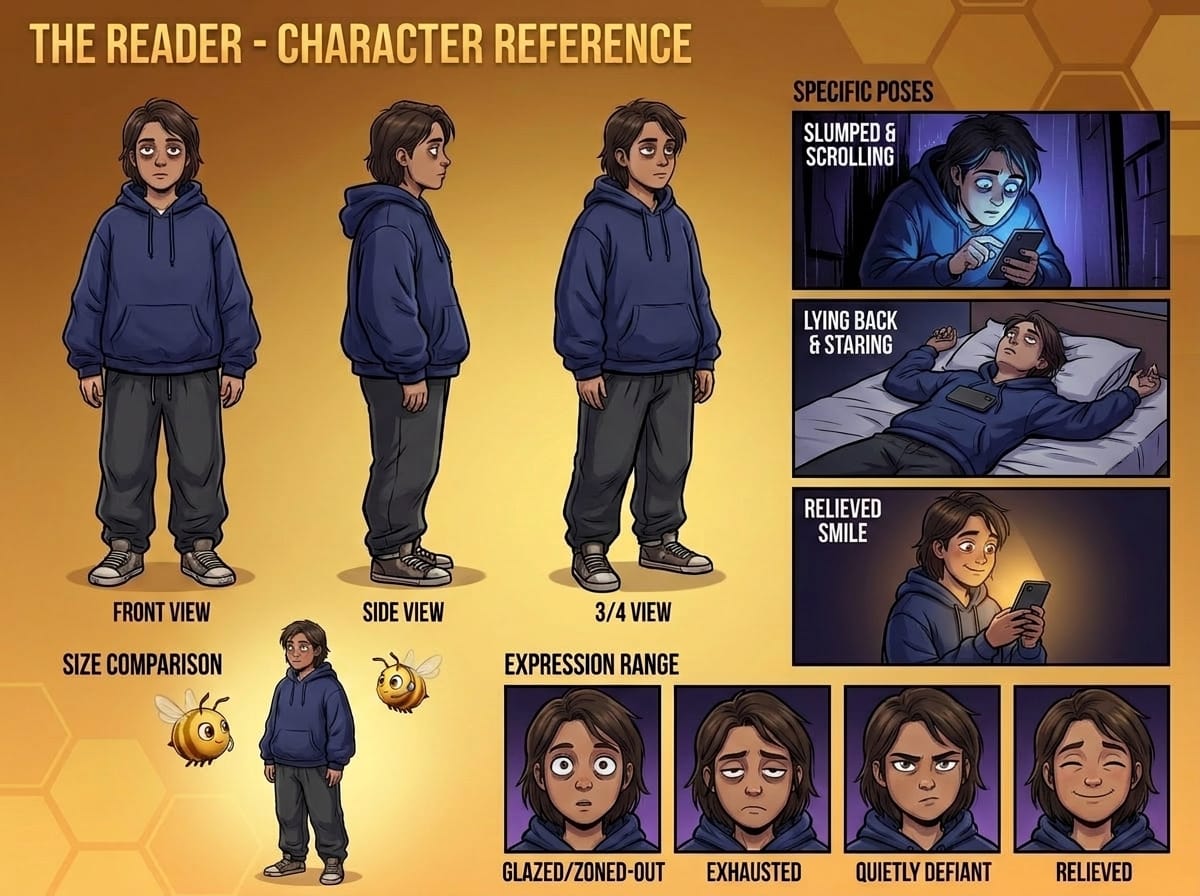
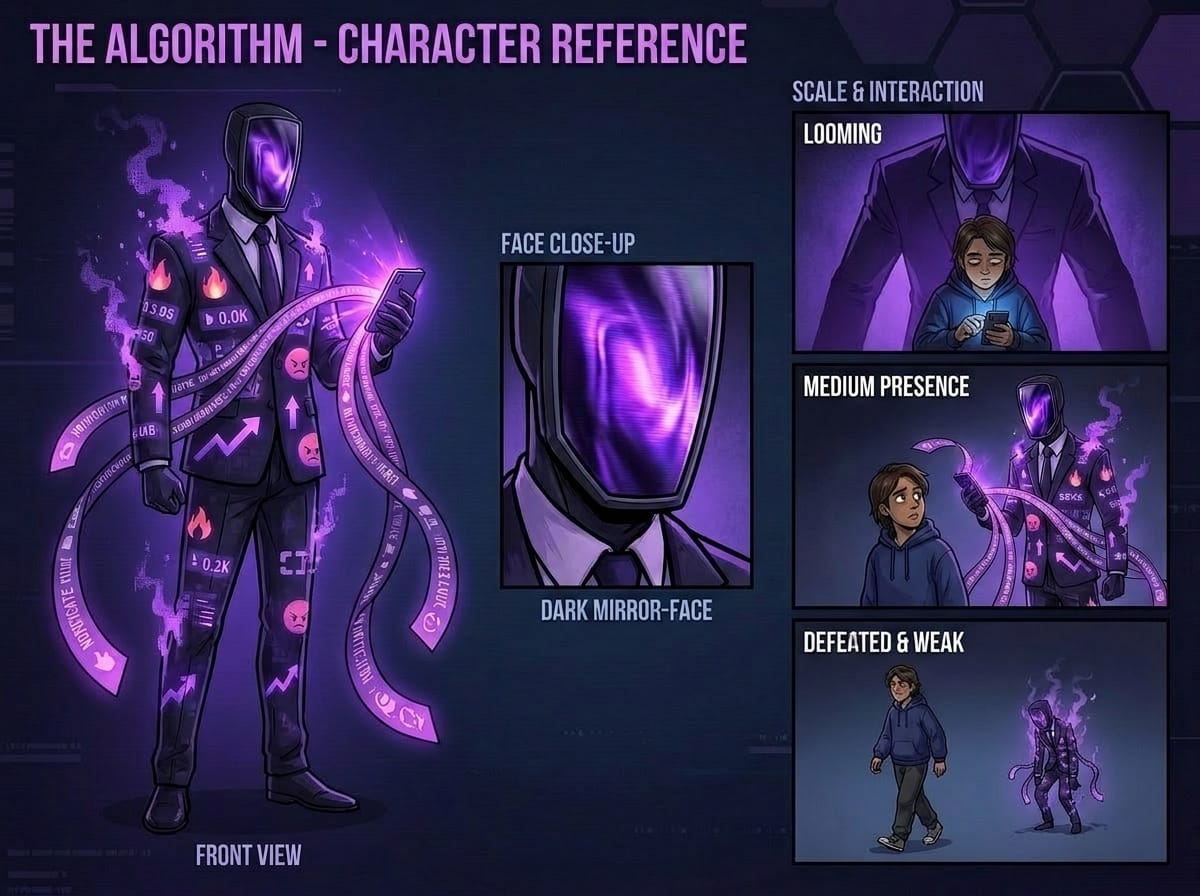
Character #2: The Algorithm
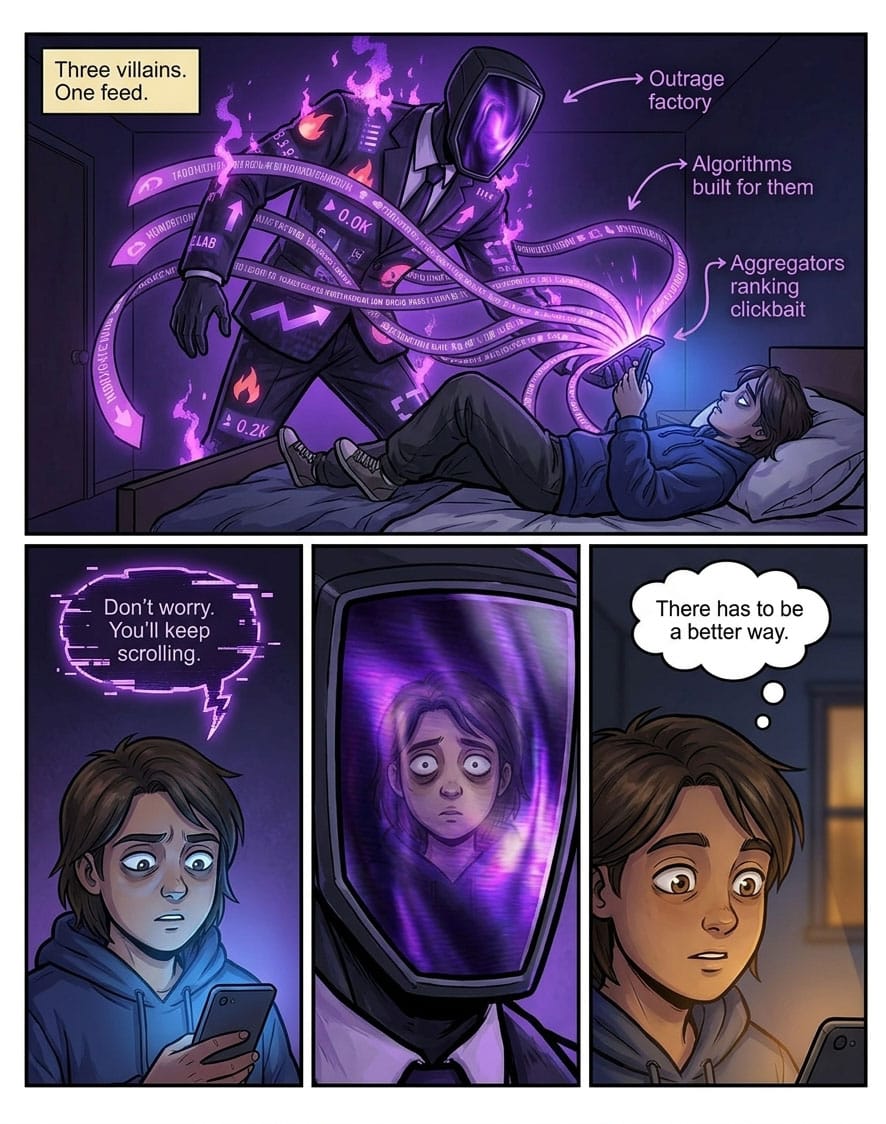
The Algorithm is the villain of the piece: a faceless figure in a sharp business suit, except the suit is made of engagement metrics like fire emojis, rage counters and trending arrows dissolving off it like smoke. It has no eyes, no mouth, and no hands, just notification banners that reach toward whatever phone is nearby.
Character(s) #3: The Builders
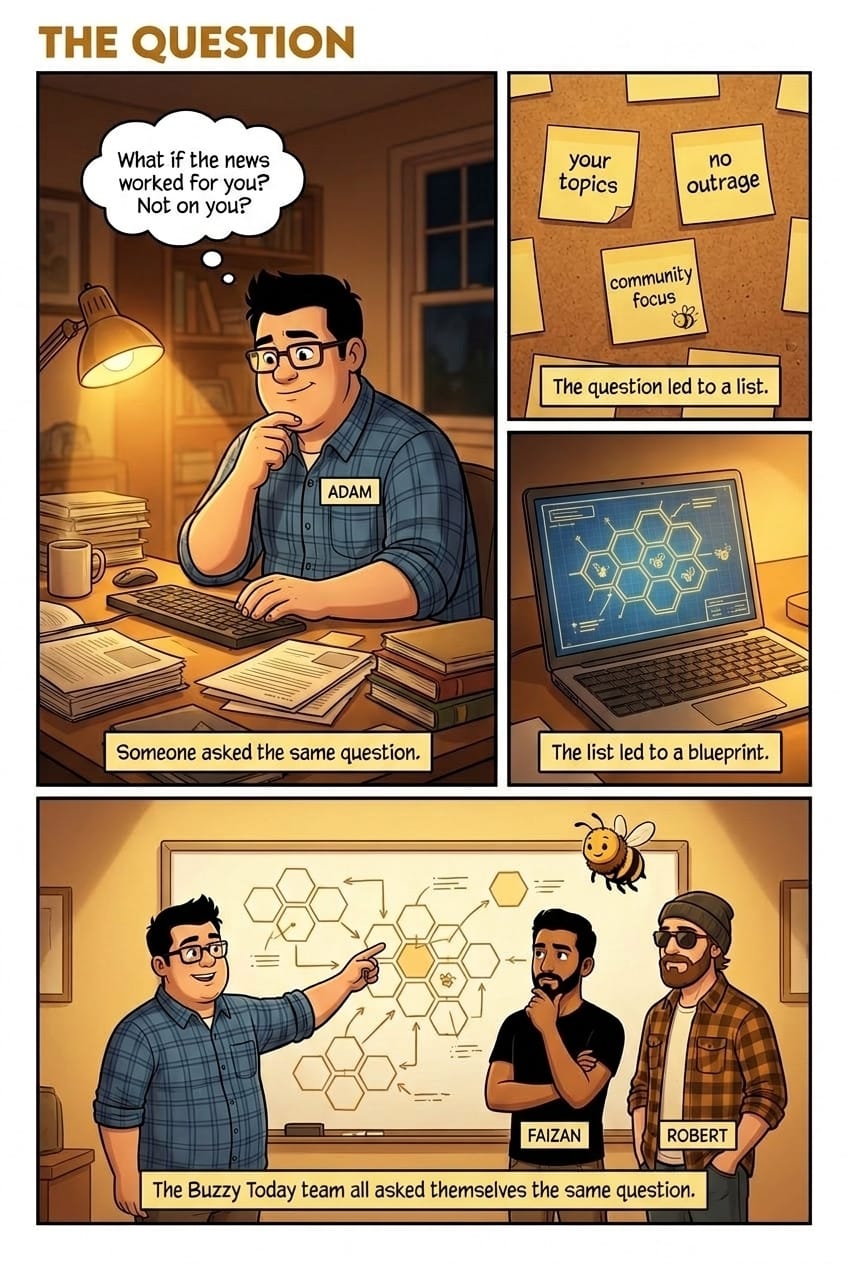
These are the people building Buzzy Today. Adam (me!), Faizan (beard, black t-shirt, the focused intensity of someone who builds things that actually work), and Robert (beanie, sunglasses always on, the calm of someone who's seen enough to know this one might just land). Adam, Faizan and Robert only appear in the amber sections, as they live in the hopeful half of the story.
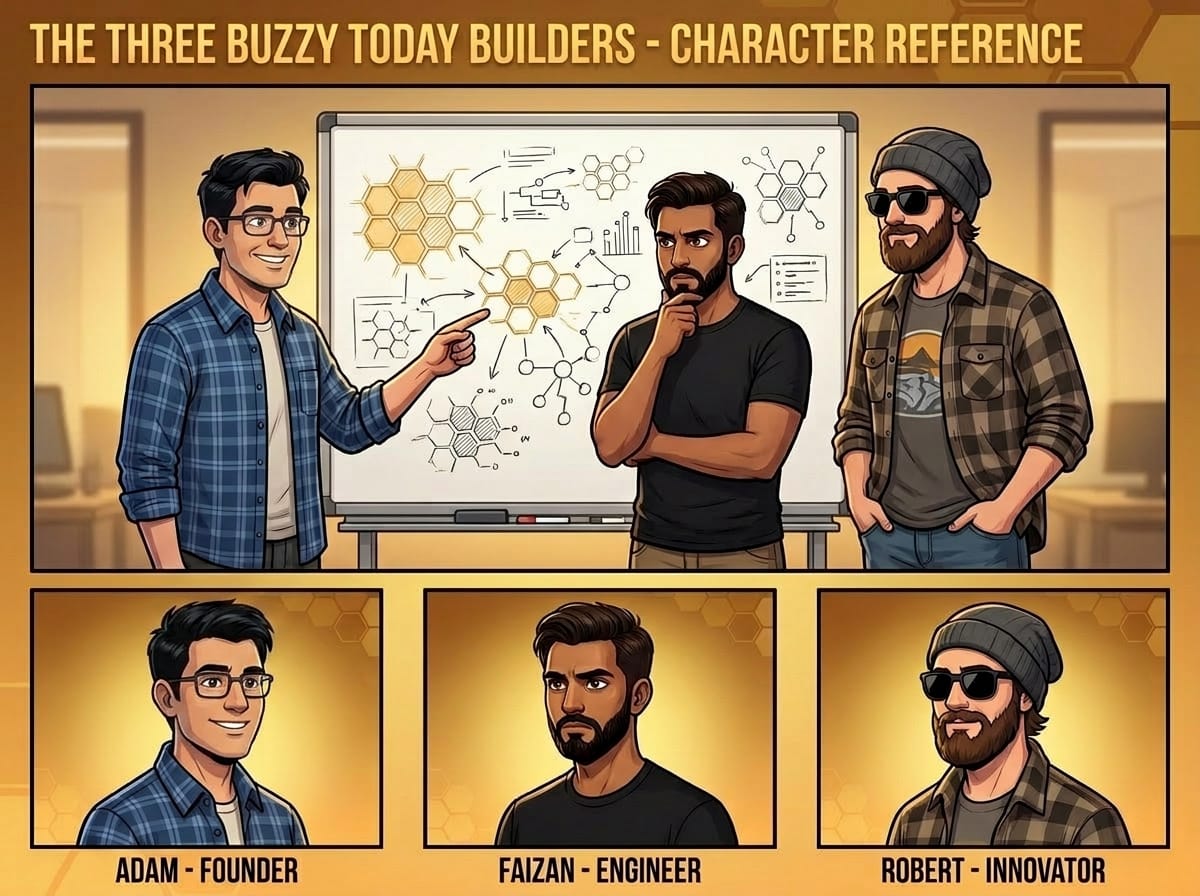
I don't know why, but the AI decided to make me a little plumper in the final version. 😦
Character(s) #4: The Bees
The Newsroom Bees will doubtless visually evolve over time, but for this comic I chose a small round amber bee, roughly the size of a grapefruit, with a tiny wireless headset and wings perpetually blurred from motion.
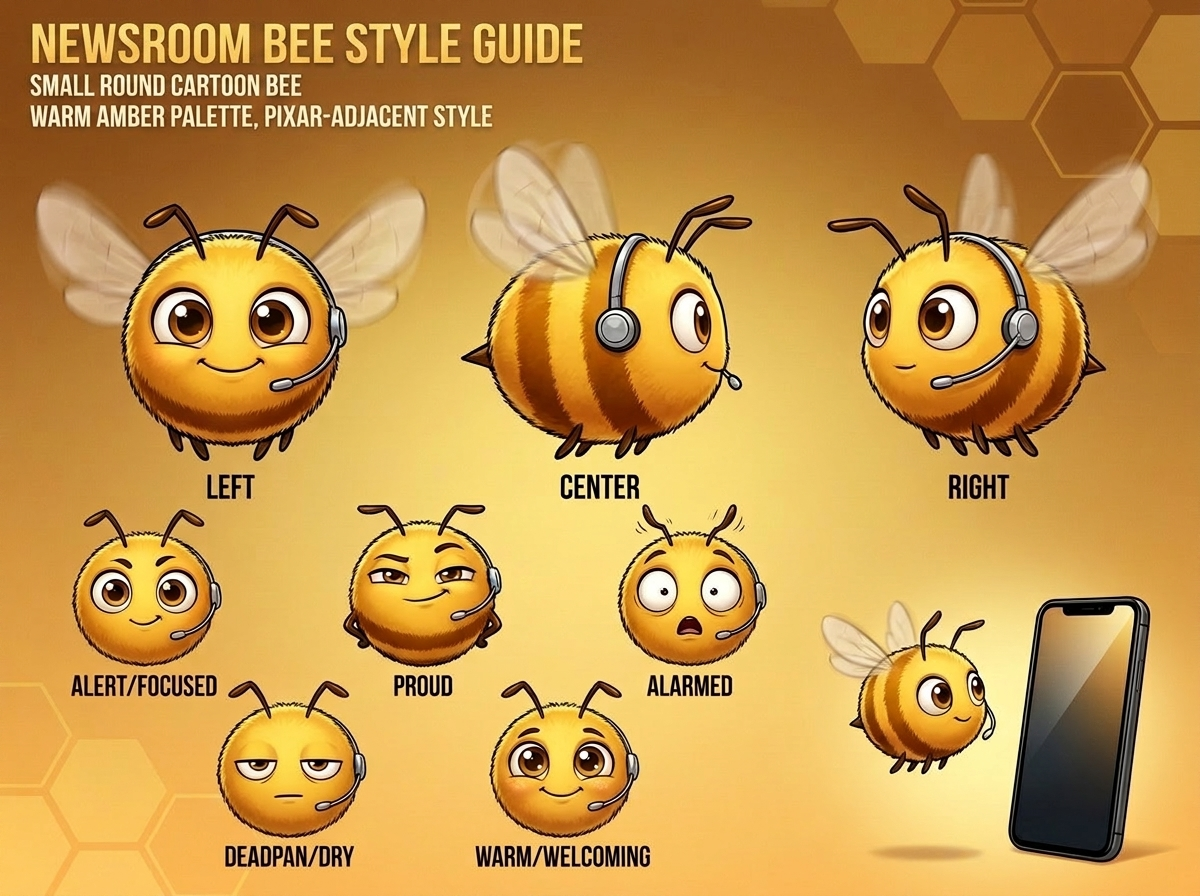
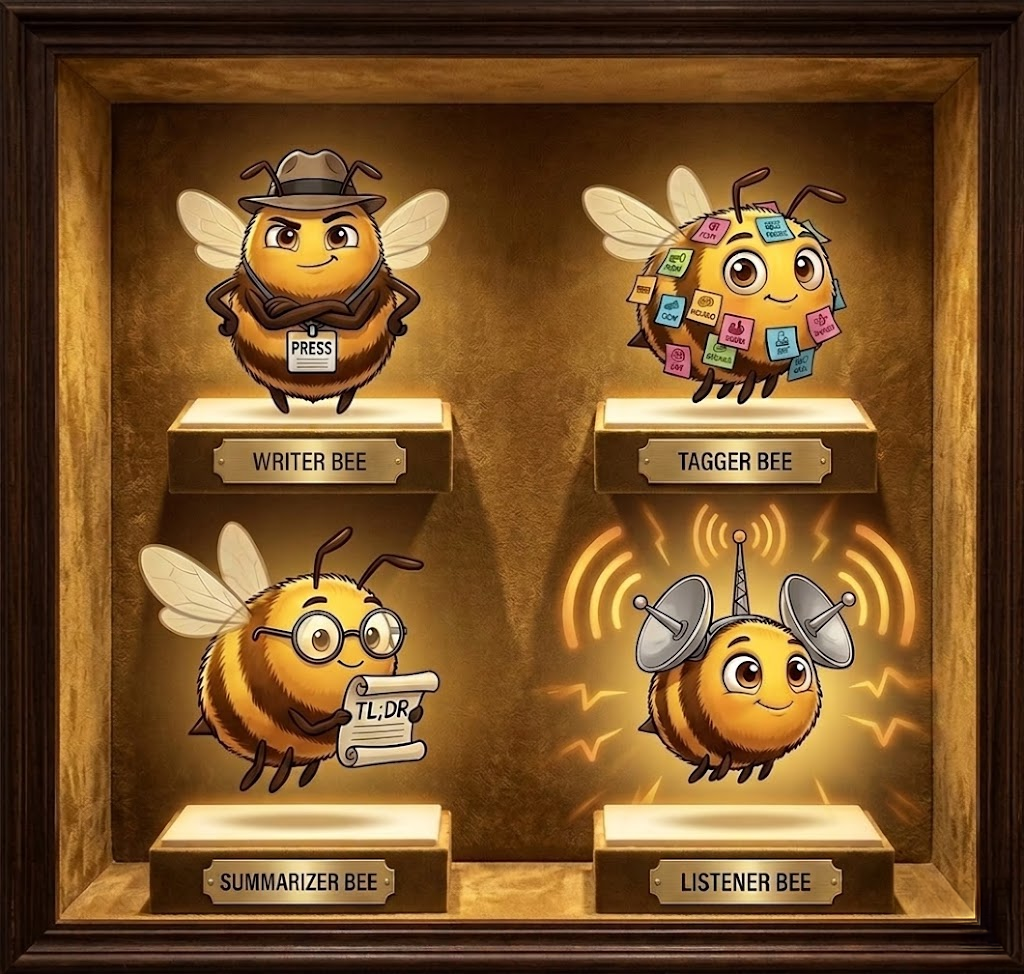
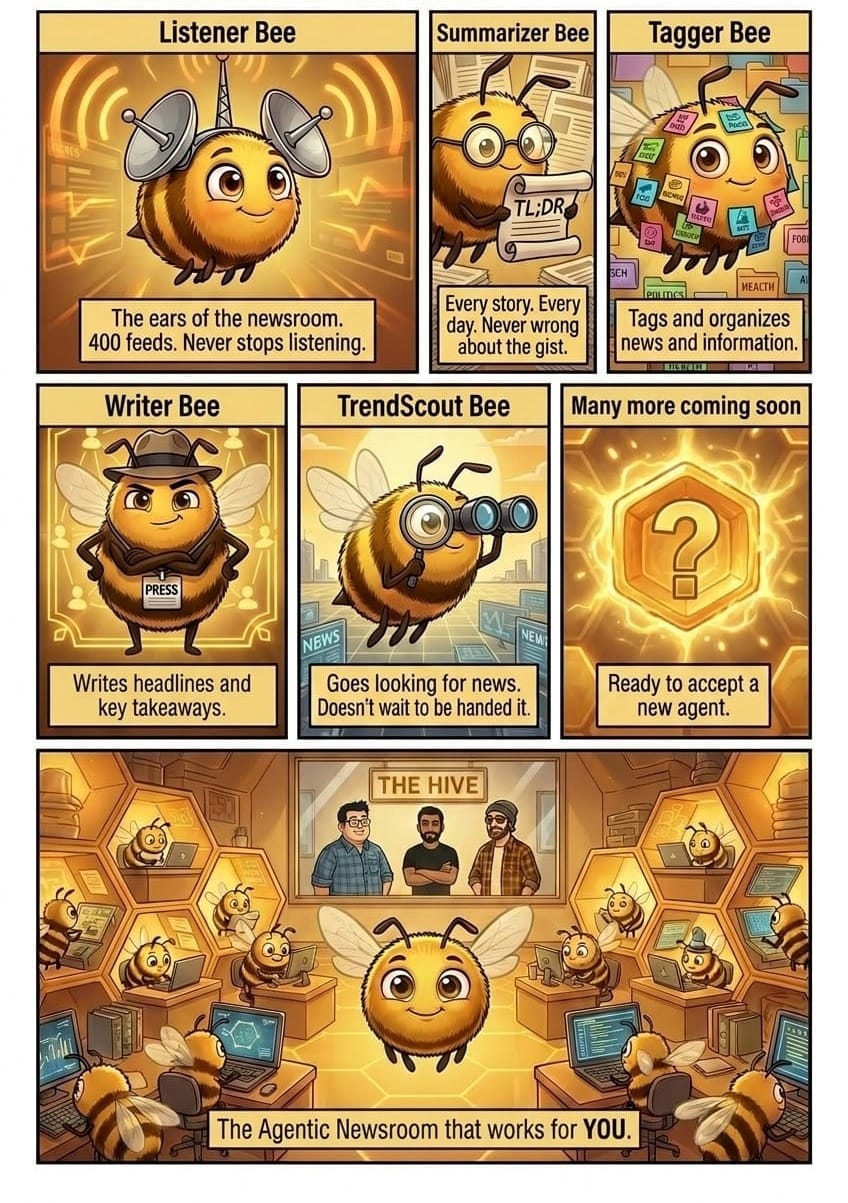
Every other agentic bee in the newsroom such as the Writer, Tagger, Summarizer and Listener all use this bee's body with different accessories, giving the whole newsroom a unified visual identity that reads instantly even at thumbnail size.
🎥Write Panel Layouts Like a Director
The other thing I learned during this process is when working with AI on visual storytelling, you need to think like a film director, not a writer. The beauty of having this structure is that you get a virtual camera in a comic world that you can point at anything and everything that you want.
When I gave vague prompts such as "show the reader scrolling through outrage headlines" I got generic results. When I wrote specific panel layouts, I got pages that actually told the story.
Opening Page : Rage baiting
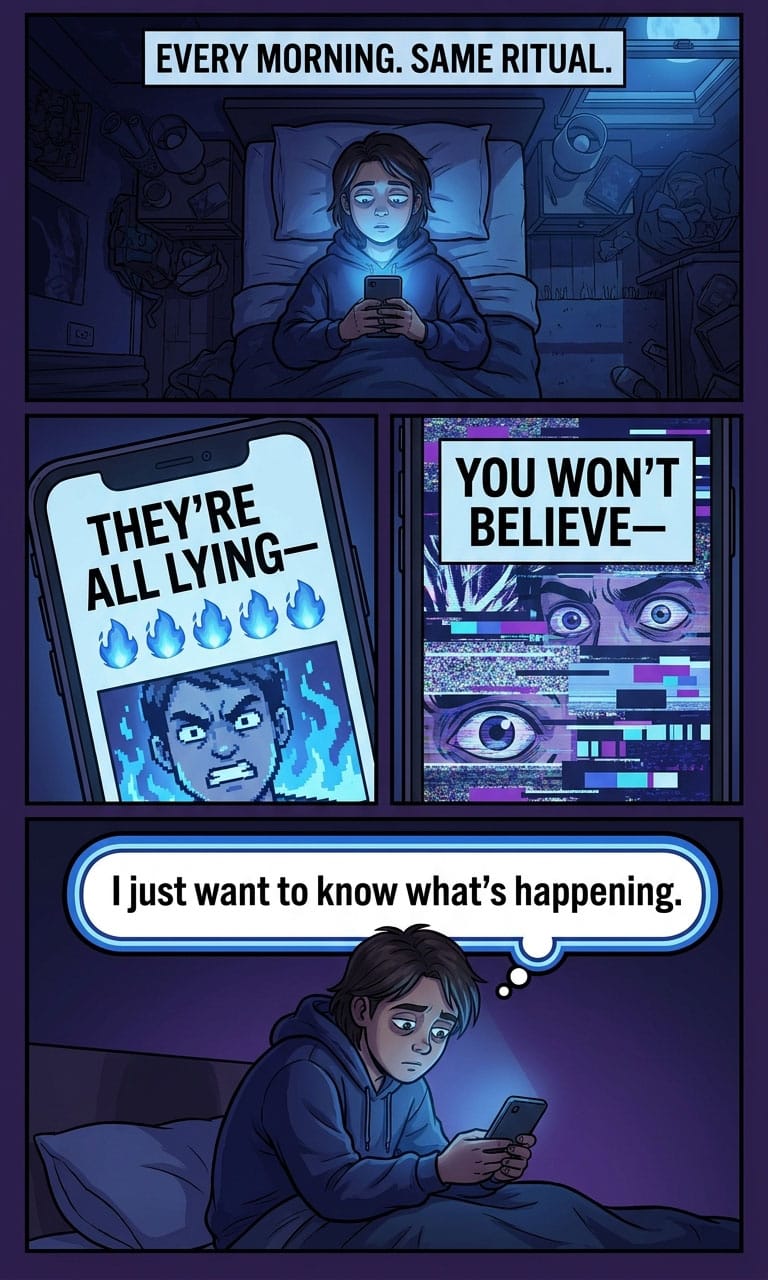
For the opening page, I specified a large, mobile-friendly format. Because of the groundwork on character and style, it came out pretty much how I wanted it.
Page 2: Doomscrolling
The panels themselves turned out to be a great storytelling device because they communicated the repetition and the cage of the doomscroll. Once you have the style and characters you can "think like a director" including format, camera position, caption text and the character's emotional state.
Page 3: The Algorithm
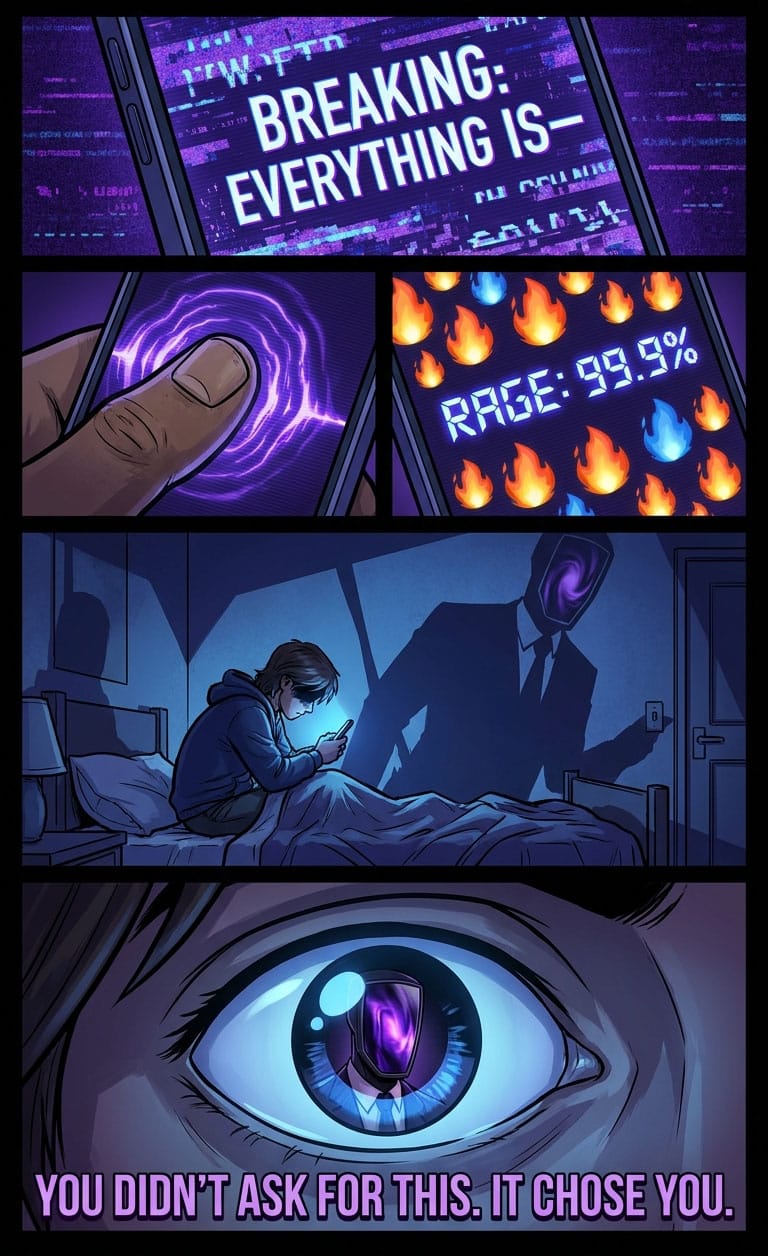
The next page shows the Algorithm fully exposed: looming over the Reader who still has no idea it's there, its three functions labeled like a corporate org chart. The Mirror-Face panel, where the Reader sees themselves reflected in the villain's void, is the moment it stops being abstract.
Page 4: Taking a Break
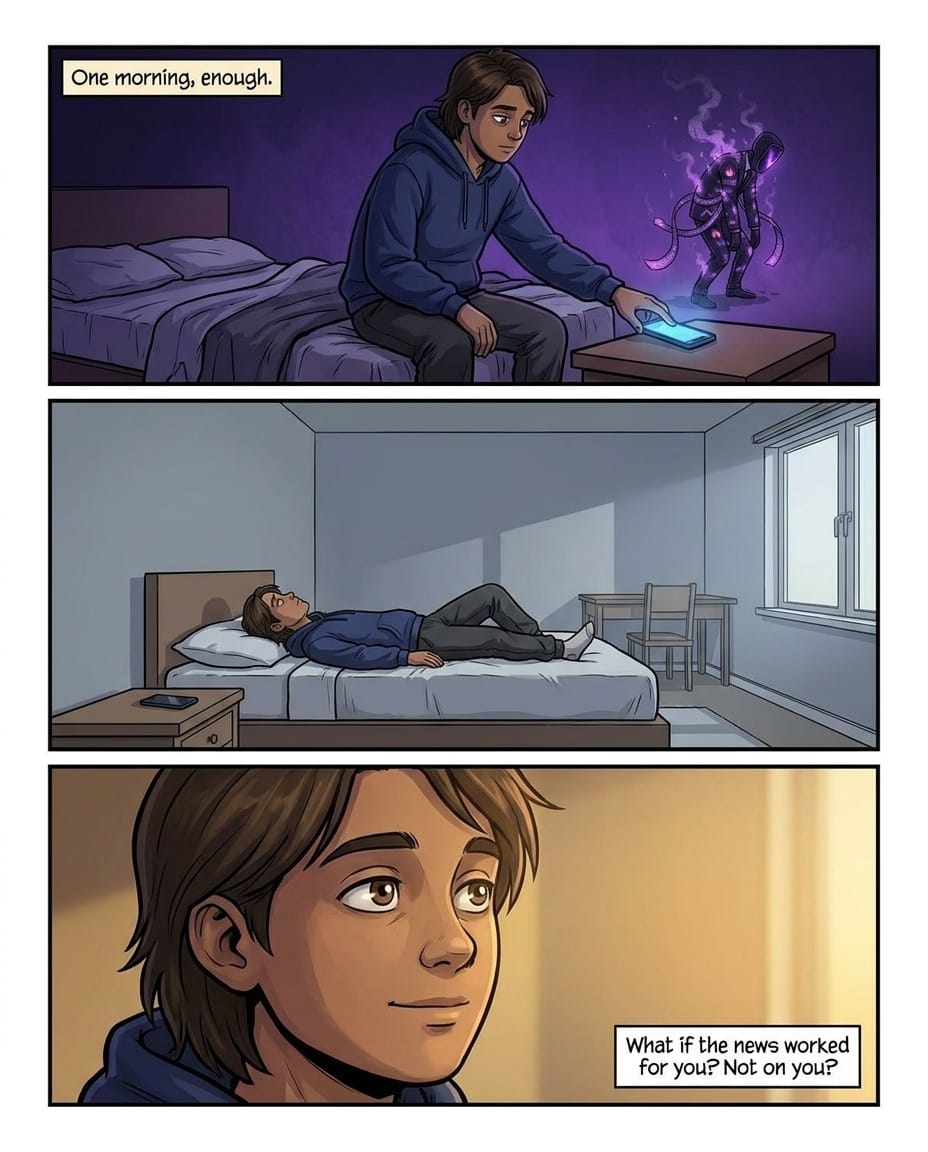
Then the reader decides to take a break. This page had three wide strips, no chaos, no phone screens. The phone goes face-down, the Algorithm shrinks and disappears, and for the first time the room has natural light. The question arrives: What if the news worked for you? Not on you? This is a concept I explore in Buzzy Today, which is that AI should be working for people as opposed to the other way around.
Page 5: A Better Way
Then we meet the builders, with Buzz perched in the corner watching. The first fully amber page purple is gone for the rest of the comic.
Page 6: The Newsroom Assembles
A six-panel introduction to the newsroom: Listener Bee, Summarizer Bee, Tagger Bee, Writer Bee, TrendScout Bee, and a glowing question-mark hex for whatever's coming next, or the next bee to be born. The bottom panel is the full hive in operation, with the three builders visible through a window in the ground. It's supposed to be the visual payoff for the second act of the comic.
The Return
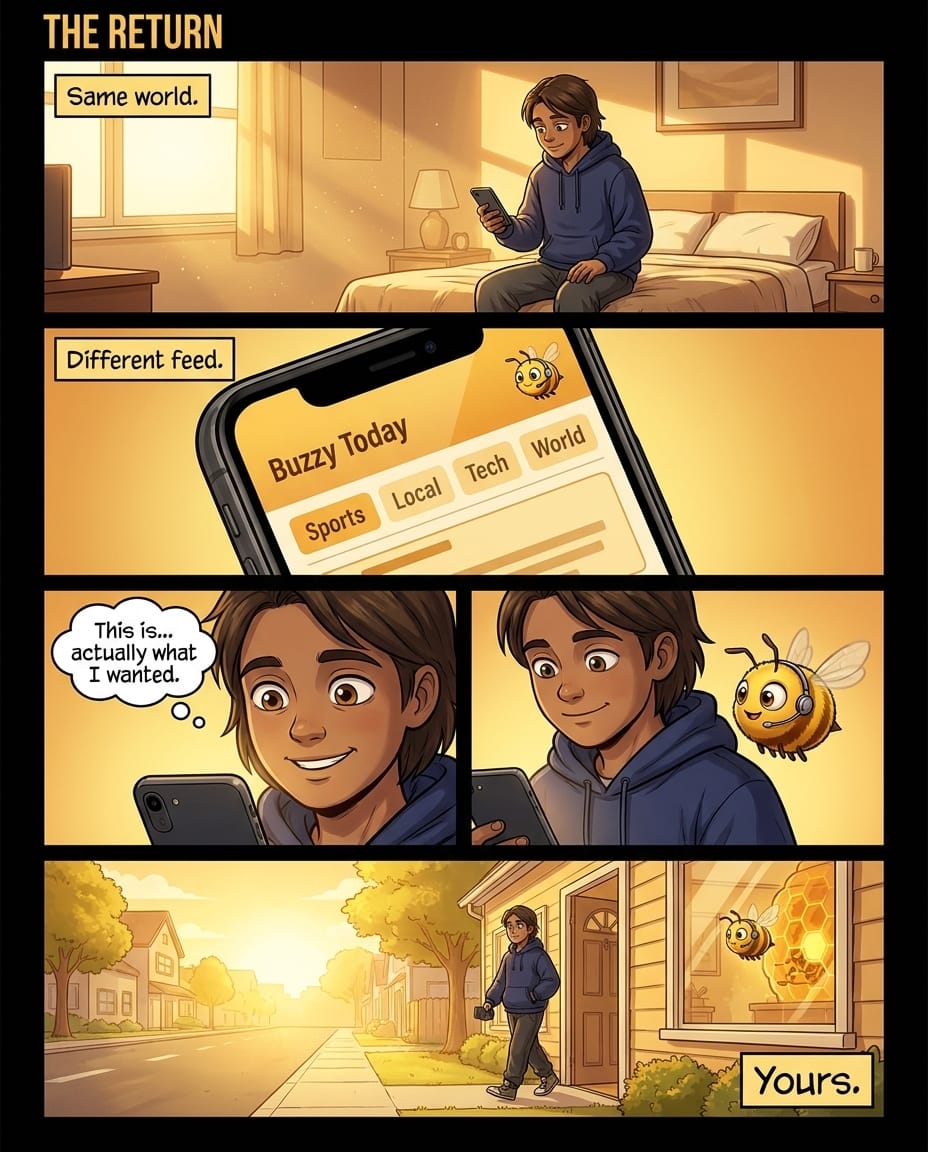
Back to the bedroom, same hoodie, same morning, but everything is different in a better way. The color is the yellow amber, representing Buzzy and also morning light. Then a closeup of the app showing topics the Reader a different feed, and thinking it is what they actually wanted. Happy reader! In the final panel the Reader walks out the door into the morning light, Buzz watching through the window. The word Yours. closes it.
Back Cover
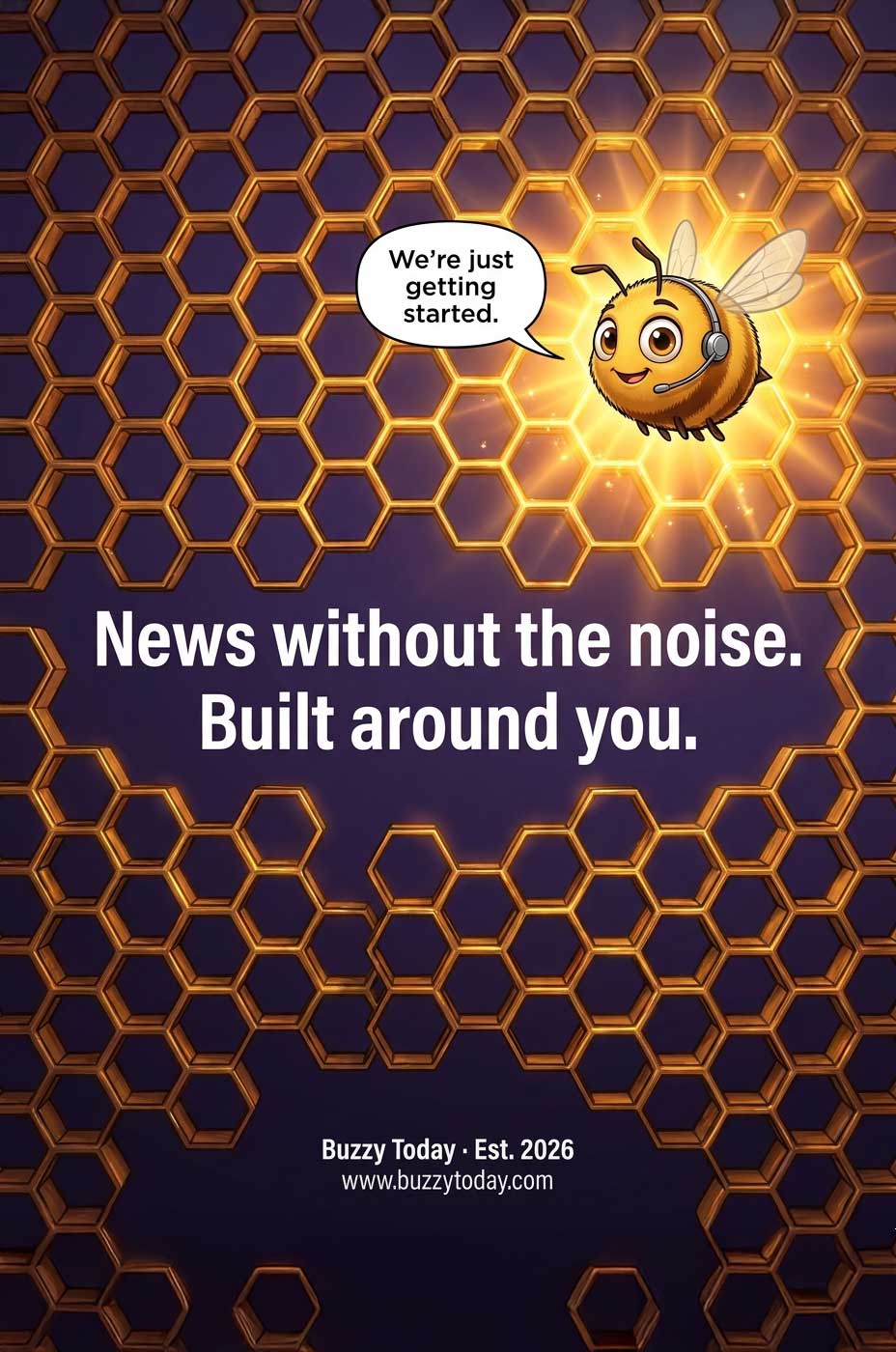
Stripped down to essentials: the brand promise, the URL, Buzz saying "We're just getting started." The midnight purple returns here, but warm now, with the color of the Algorithm reclaimed as something hopeful. Then our tagline, "News without the noise. Built around you." and our URL www.buzzytoday.com
Hope you enjoyed reading this!
I hope this was informative and helpful for your AI journey.
Adam Lavine is the founder of Buzzy Media which publishes Buzzy Today, a personalized AI newsroom built around the topics you actually care about.